
by TOA Admin | February 26, 2025 | Research & Stats
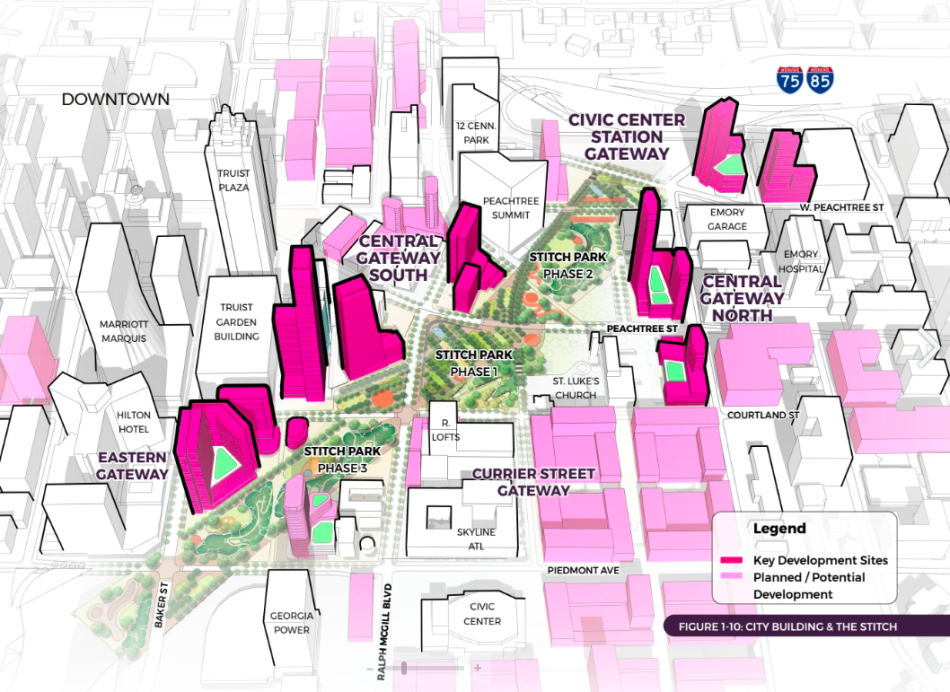
In Downtown Atlanta, the highly anticipated Stitch project is poised to transform the local commercial real estate landscape. Developed by Central Atlanta Progress (CAP) and the Atlanta Downtown Improvement District (ADID), this ambitious initiative aims to create approximately 14 acres of greenspace atop the bustling Downtown Connector, effectively reuniting neighborhoods once separated by highway infrastructure. Beyond its aesthetic and community benefits, the Stitch stands to boost the area’s investment profile, creating attractive opportunities for developers, investors, and businesses alike.
Reconnecting and Revitalizing Downtown
For years, the Downtown Connector has functioned as both a vital thoroughfare and a physical barrier, isolating communities from Atlanta’s central business district. The Stitch project is designed to “mend” this division by capping the highway and creating an expansive public park. This type of infrastructure improvement is well-known for catalyzing commercial growth, drawing new development and revitalizing underused land.
Key Takeaways for Commercial Real Estate:
- Enhanced Connectivity: With improved pedestrian corridors, businesses can anticipate increased foot traffic, supporting retail, dining, and hospitality ventures.
- Rising Property Values: Major civic improvements often lead to higher land and building valuations, positively impacting commercial leasing and sales.
- New Investment Zones: Large-scale projects frequently encourage private development in adjacent areas, creating fresh opportunities for early adopters seeking high-growth potential.
Phased Development for Strategic Investment
The Stitch master plan outlines three phases slated for completion around 2036. Phase One—approximately 5.7 acres—has already secured close to $200 million in funding, primarily through a federal Reconnecting Communities and Neighborhoods grant. Construction for this initial segment is scheduled to begin in 2026.
Phase One: Establishing a Central Green Space
- Design Features: Pathways, native gardens, a plaza, shade structures, pavilions, a playground, restrooms, and other communal amenities.
- Commercial Impact: The availability of new public spaces often increases nearby property values and drives demand for commercial leases in adjacent buildings.
Phases Two and Three
- Timeline: Project leaders anticipate Phase Two to begin in 2029 and Phase Three by 2033.
- Funding Strategy: Additional resources will include state and federal grants, philanthropy, municipal investment, and “real estate value capture.”
- Long-Term Growth: Once completed, the Stitch aims to provide 14 acres of continuously linked public space, exerting a sustained positive influence on Downtown Atlanta’s commercial real estate market.
Creating Housing and Mixed-Use Environments
According to project planners, Downtown Atlanta could host 16,000 new housing units in conjunction with the Stitch, spanning various affordability levels. This influx of residential capacity will support a more vibrant, mixed-use community, thereby enhancing the outlook for commercial spaces.
- Mixed-Use Advantages: Increased residential density translates to heightened demand for everyday services, retail establishments, restaurants, and other consumer-focused businesses.
- Equitable Growth: A focus on affordability and inclusive amenities may draw socially responsible investors and tenants who value sustainability and community engagement.
Competitive Landscape: Midtown and Buckhead Concepts
Other highway-capping proposals, like Midtown’s Connector Park (recently halted) and Buckhead’s HUB404 (still in progress), showcase Atlanta’s broader commitment to innovative urban renewal. These developments collectively signal sustained public and private investment in dynamic infrastructure projects, reinforcing Atlanta’s appeal as a forward-thinking commercial real estate market.
Why Investors Should Take Notice
- Property Appreciation
Large-scale projects that create desirable public amenities commonly lead to increased property values, benefiting investors and owners seeking higher returns. - Enhanced Visibility
Signature projects attract attention from both residents and visitors. Retailers and office tenants often find value in locations that offer high foot traffic and elevated brand exposure. - Community Integration
Developments emphasizing community well-being align with current consumer and corporate trends, potentially offering a competitive edge in recruiting tenants and customers. - Stability and Growth
With robust backing from federal, state, and local stakeholders, the Stitch has a strong likelihood of successful completion—mitigating risk for commercial real estate investors.
Next Steps: Preparing for 2025 and Beyond
Project leaders project 2025 to be a pivotal year, as ongoing planning and stakeholder input refine the final designs of the initial phase. Public meetings and presentations are expected to provide a clearer vision, setting the stage for potential commercial real estate ventures around the Stitch.
Conclusion
The Stitch represents more than just a groundbreaking infrastructure project—it is a transformative effort that stands to reshape Downtown Atlanta’s commercial real estate market for the long term. By reconnecting neighborhoods, increasing public amenities, and driving equitable growth, the Stitch can serve as a cornerstone for forward-thinking investments in the Atlanta area. Developers, investors, and business owners looking to capitalize on emerging opportunities should closely monitor the Stitch’s progress and position themselves for success in a revitalized Downtown Atlanta.